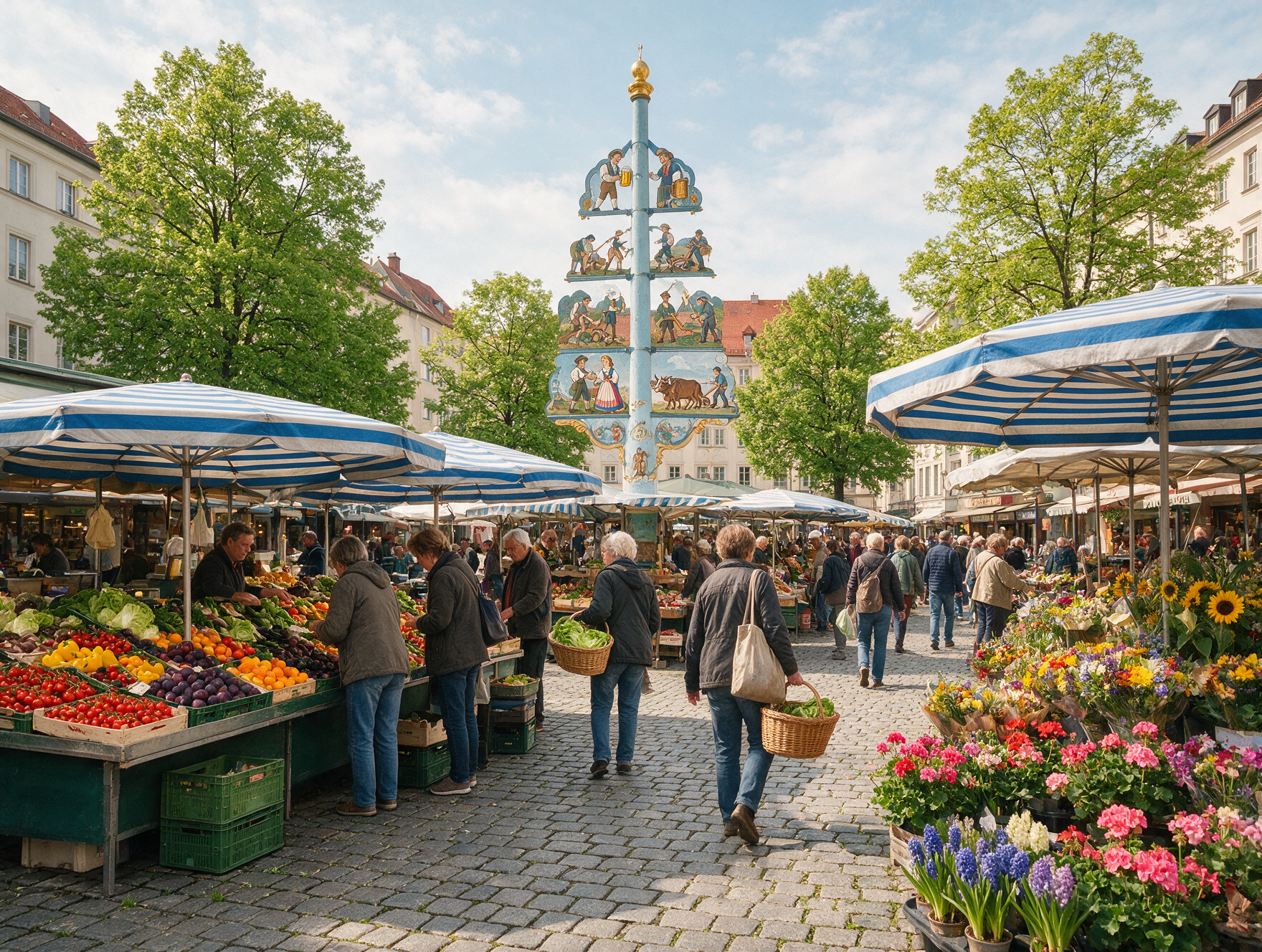
At quarter to eight on a weekday morning, the flower stall at Viktualienmarkt is already three deliveries deep, and the woman running it knows which regular wants her ranunculus wrapped in brown paper without being asked. Nobody photographs this moment. By ten, when the tour groups arrive, the market has already lived half its day. That gap between what tourists see and what actually happens is the whole story of Munich.
Most first-time visitors do Marienplatz, the Glockenspiel, maybe a rushed hour at the Hofbräuhaus, and call it Munich. It isn’t wrong, exactly. It’s just incomplete, the way a photo of a person’s face tells you almost nothing about how they spend a Tuesday. This Germany travel guide to Munich is built around the Tuesday version — the beer garden etiquette nobody explains until you’ve already broken a rule, the market rhythms that run on their own clock, the neighborhoods where people actually pay rent, and the everyday habits that separate a week of sightseeing from a week that feels like you briefly lived there.
We wrote this as part of Get Tripped’s ongoing Germany destination guide, and if you’re building out a full trip rather than just a Munich stopover, our Germany 7 Days Travel Itinerary is a good next read.
In This Guide
- Why Munich Rewards Slowing Down
- Best Time to Visit Munich (and How It Fits the Rest of Germany)
- Beer Garden Etiquette: What Locals Actually Do
- Viktualienmarkt: Shopping the Way Munich Actually Shops
- The English Garden: Surfers, Sunbathing, and Sunday Rituals
- Neighborhoods Where Locals Actually Live
- Getting Around: MVV, Bikes, and the Munich Commute
- Eating Like a Local (and Finding Indian Food When You Need It)
- Munich Right Now: Oktoberfest and the Autumn Rhythm
- Planning the Trip: Itinerary, Costs, and Visas
- FAQs
Why Munich Rewards Slowing Down
Munich doesn’t perform for visitors the way Paris or Rome sometimes do. It’s a city of just under 1.5 million people that runs on routine — the same bakery order, the same S-Bahn platform, the same beer garden table on a Friday. That routine is exactly what makes it interesting to step into for a week, rather than race through.
This isn’t a backpacker’s checklist. Get Tripped builds trips for travelers who want a comfortable base, good food, and a real feel for a place, not the cheapest possible version of it. Munich rewards that approach because so much of what makes it distinct — a beer garden bench under 200-year-old chestnut trees, an hour at a market stall, a slow bike ride along the Isar — costs little to nothing but takes a bit of local knowledge to do right.
Best Time to Visit Munich (and How It Fits the Rest of Germany)
If you’re weighing the best time to visit Germany overall against Munich specifically, the two line up more than they diverge. May through September is when the city is at its most livable: beer gardens are in full swing, the English Garden fills with people the moment the sun comes out, and daylight stretches past 9pm in June. This window also covers Germany summer holidays in July and August, when domestic tourism peaks and popular beer gardens get genuinely crowded on weekends — book restaurant tables ahead if you’re set on somewhere specific.
September brings Oktoberfest (more on that below), which is its own animal — thrilling if that’s what you came for, chaotic if you didn’t plan around it. If you’d rather see the quieter, everyday Munich this guide is about, late April, early May, or the first half of October — after the Wiesn tents come down — tend to work best. December has its own case to make, mostly built around the Munich Christmas Markets, but that’s a colder, more festive version of the city than the one we’re describing here. Most travelers planning Germany trips from April to October will find Munich comfortable, if you pack for rain regardless of season — Bavarian weather changes its mind fast.
Beer Garden Etiquette: What Locals Actually Do
Munich has around 100 beer gardens, and they’re not restaurants that happen to be outdoors — they’re a specific social institution with rules nobody hands you a leaflet about.
You can bring your own food. Really.
This dates back to a royal decree from 1812, when King Maximilian I allowed beer gardens to sell drinks but not food, so patrons started packing their own. That right still holds at the traditional self-service beer gardens (look for a “Brotzeit”-friendly sign or just watch what locals with cooler bags are doing). Buy your Maß — that’s the one-litre mug, and yes, it’s heavy, closer to two and a half kilos full — from the counter, then unpack the pretzels, radishes, and Obatzda you brought from home. Table-service sections, usually marked with cloth-covered tables, are a different arrangement — you order food there, and bringing your own is not the done thing.
Don’t sit at a Stammtisch
Look for a small sign or reserved marker on a table, sometimes worn smooth from decades of the same regulars leaning on it. That’s a Stammtisch — an informal reserved table for people who’ve earned the spot through years of showing up. Taking that seat without an invitation is one of the few things that will actually irritate an otherwise easygoing crowd. When in doubt, ask a server before sitting anywhere that looks even slightly claimed.
The chestnut trees aren’t decoration
Bavarian beer gardens were traditionally planted with chestnut trees on purpose — their shallow, wide roots kept the ground cool for the beer cellars dug underneath, back before refrigeration. That’s why so many of Munich’s beer gardens still sit under a dense old canopy rather than open sky. It’s a small fact worth knowing, because it explains why the good ones feel less like a beer hall’s patio and more like drinking in a park.
A mistake worth avoiding: don’t assume every beer garden works the same way. Some, like the one at Hirschgarten, one of the largest in the world, even provide washbasins so self-service patrons can rinse their own glasses. Ask, watch, or check ahead rather than guessing.
Viktualienmarkt: Shopping the Way Munich Actually Shops
Viktualienmarkt has been Munich’s central food market since King Max I Joseph set it up in 1807, and it’s grown to around 100 stalls selling everything from Bavarian sausage to imported spices. The square itself is open around the clock, but the stalls keep their own hours, generally 8am to 8pm on weekdays and Saturdays — the market is effectively closed on Sundays, which surprises visitors more than it should.
Locals treat it less like a tourist attraction and more like a specialist grocery run: cheese and wine from one stall, honey from another, a specific vendor for soup stock, another for exactly the right kind of mushroom in autumn. If you want to shop it the way residents do, go before 10am on a weekday, buy from whichever stall has a line of German-speaking regulars rather than the ones with the biggest English-language signage, and don’t expect a discount for buying more — prices are fixed and mostly fair.
The maypole standing in the middle since 1962 is worth a proper look, not just a photo. Munich’s breweries donated it, and it’s carved with scenes of the city’s trades and traditions — barrels of beer being hauled by horse and cart, dancers from the Schäfflertanz. The market’s own official site has current hours if you’re planning around it, since holidays and Fasching (Carnival) shift the schedule.
The beer garden in the middle of the market rotates beer from all six major Munich breweries rather than sticking to one — a rare setup, and a good excuse to sit down between errands the way locals do rather than treating the market as a five-minute photo stop.
The English Garden: Surfers, Sunbathing, and Sunday Rituals
The Englischer Garten is bigger than New York’s Central Park, and locals use it the way city residents use any large park — as a shortcut, a gym, a picnic spot, a place to read for twenty minutes between meetings. The one thing that stops every visitor in their tracks is the Eisbach, a man-made stream where a permanent standing wave draws river surfers year-round, cold water included. There’s no fee and no schedule — you just find a spot on the small bridge and watch wetsuited surfers queue for their turn, which can run to a dozen or more people deep on a warm weekend.
A short walk further into the park, the Schwabinger Bach area and the Monopteros hill are known for their sunbathing lawns, where nudity is legal and genuinely unremarkable to Munich residents — it’s a longstanding local custom (Freikörperkultur, or FKK) rather than anything transgressive. If it’s not your thing, the rest of the park’s lawns are entirely normal picnic and reading spots, so there’s no need to detour around it — just pick a different meadow.
A tip that doesn’t make most top-10 lists: rent a bike for a couple of hours and ride the full length of the park to the Chinese Tower beer garden, then keep going toward Kleinhesseloher See. It’s how a lot of Munich residents actually spend a free Saturday afternoon, and it covers far more ground than walking.

Neighborhoods Where Locals Actually Live
Marienplatz is the city’s living room, not where anyone actually lives. For that, look a few tram stops out.
Glockenbachviertel
South of the old town, between the Isar and Gärtnerplatz, this is Munich’s most independent-minded neighborhood — small boutiques with names nobody would guess the meaning of, a long-standing LGBTIQ+ community dating to the 1960s, and courtyards tucked behind unremarkable street fronts. It’s dense with cafés that don’t bother with English menus and bars that fill up after 9pm rather than at happy hour.
Haidhausen
East of the river, Haidhausen has a quieter, more residential feel — cobbled side streets, restored 19th-century buildings, and a Sunday-morning pace even on weekdays. It’s where a lot of Munich families with a bit more space and a bit less nightlife choose to live, and it’s an easy walk to the Isar’s riverside paths.
Schwabing
North of the English Garden, Schwabing was Munich’s bohemian, artist quarter a century ago and still carries a studenty, slightly intellectual energy thanks to its proximity to the university. Leopoldstraße gets the tourist traffic; the smaller streets behind it are where the actual neighborhood life happens — bookshops, small bakeries, a slower rhythm than the main boulevard suggests.
None of these need a full day each. An afternoon spent walking one of them, sitting in a local café rather than a chain, does more for understanding the city than another hour at a landmark.
Getting Around: MVV, Bikes, and the Munich Commute
Munich’s transit network, run by the MVV, covers U-Bahn, S-Bahn, trams, and buses on a single ticket system, and it’s genuinely one of the more usable metro systems in Europe for a first-time visitor. As of 2026, most German residents get around on the Deutschlandticket, a flat-rate €63-a-month pass covering local and regional transit nationwide — worth knowing even if you won’t buy a monthly pass yourself, since it’s why you’ll see so few people fumbling with paper tickets. For a short visit, single tickets or a day pass through the MVV app make more sense; we’ve also put together a dedicated Germany Public Transit Guide if you’re covering more than one city.
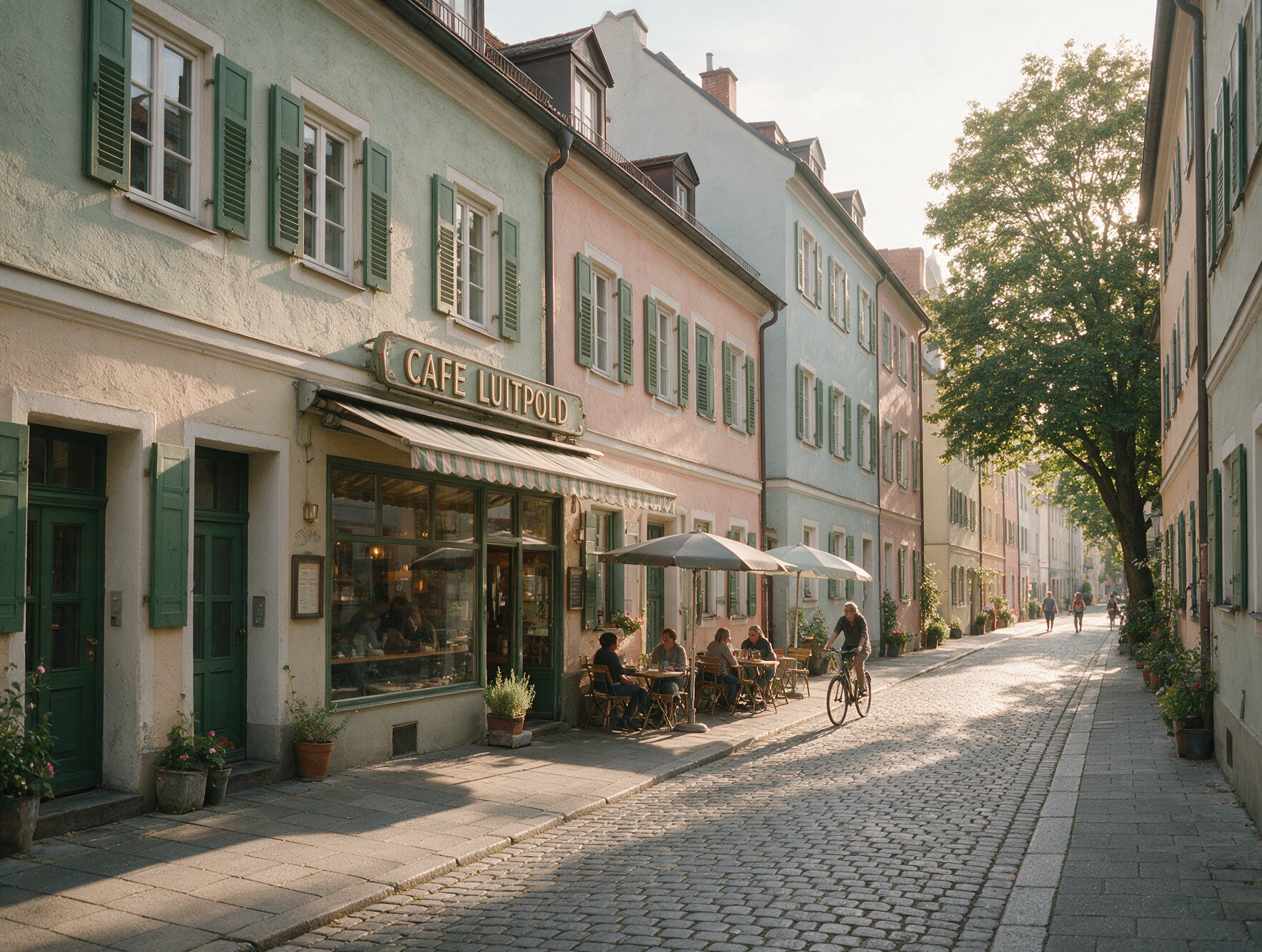
Bikes are a serious part of daily life here, not a tourist activity — Munich is largely flat, with a dense network of dedicated bike lanes. The city-backed bike-share scheme, MyRadl, has stations across town, and if you’re already holding an MVV transit pass, the first 30 minutes on a standard bike is often free. Locals commute on bikes in work clothes, rain or not; it’s less a fitness statement than just the fastest way to cross town.
A mistake to avoid: don’t walk in the bike lanes, which run alongside many sidewalks and are used with real commuter speed and little patience for distracted pedestrians. It’s the single fastest way to get an annoyed bell rung at you within your first hour in the city.
Eating Like a Local (and Finding Indian Food When You Need It)
Bavarian food outside the tourist core leans toward Schweinshaxe, Weisswurst eaten only before noon (a real local rule, not a marketing line), and simple, hearty lunch specials — a Tagesgericht — that change daily and are usually the best value on any menu, even at a mid-range restaurant. For a deeper dive into the food side of a Germany trip, our Germany Food Trail post covers more ground than we can here.
Indian food in Germany for tourists is easier to find in Munich than most visitors expect — there’s a genuine, growing Indian and South Asian community here, and neighborhoods like Schwabing and areas near the university have several solid options if you need a break from Bavarian food or are traveling with family members who prefer familiar spices. It’s not the same as home, and portion styles differ, but it’s a reliable fallback rather than a compromise.
Payment norms are straightforward: cards are widely accepted now at restaurants and shops, though some small bakeries and market stalls still prefer cash — carry a modest amount of euros for exactly those moments.
Munich Right Now: Oktoberfest and the Autumn Rhythm
If you’re reading this in late September, Munich is mid-Oktoberfest — the 2026 festival runs from September 19 to October 4 at Theresienwiese, and the city’s rhythm shifts noticeably around it. Hotel prices climb, locals either lean fully into it or deliberately avoid the Wiesn grounds for two weeks, and beer gardens elsewhere in the city get busier as an alternative to the festival crowds. If Oktoberfest itself is the plan, we’ve written a full Oktoberfest 2026 Munich guide covering tent reservations, what to wear, and how to actually get a seat.
If you’re here for the “local life” version of Munich this guide describes rather than the festival itself, the first half of October — once the tents come down — is one of the best windows of the year: warm days, cooling evenings, and beer gardens that have gone back to their normal, unhurried pace.
Planning the Trip: Itinerary, Costs, and Visas
Three to four days is enough to get a real feel for Munich without rushing — one day for the old town and museums, one for the market and a neighborhood walk, one for the English Garden and a beer garden evening, with a day held back for a Bavarian countryside trip if you have it. If Munich is one stop on a wider trip, our Germany 7 days travel itinerary shows how it fits alongside Berlin, the Romantic Road, or a Rhine Valley add-on — Berlin and Munich tour packages are a common combination for first-time visitors to Germany, since the two cities show almost opposite sides of the country’s culture.
On cost: expect a mid-range hotel in Munich to run higher than in smaller German towns, given the city’s size and Oktoberfest-season demand spikes, with meals, transit, and a couple of beer garden evenings adding a comfortable but not extravagant daily spend. Germany trip cost from India varies a good deal based on season, flight routing, and hotel category, which is exactly why a custom Germany itinerary — built around your dates, budget, and interests rather than a fixed template — tends to work out better than a generic package, especially for Germany family holiday packages where different age groups want different paces.
For visas: Indian passport holders need a Schengen visa to enter Germany, applied for in advance through the German missions or visa centers in India, with processing times that can stretch during peak summer and Oktoberfest season, so apply early rather than close to your travel dates. We’ve laid out the full process, documents, and current timelines in our Germany Visa Guide for Indian Travelers. If budget flexibility matters, our Free Things to Do in Germany post is worth a look too — several of the best Munich experiences described in this guide, including the English Garden and window-shopping Viktualienmarkt, cost nothing at all.
FAQs
Is it rude to bring my own food into a Munich beer garden?
No — it’s a protected local custom dating back to an 1812 royal decree, and it still applies at traditional self-service beer gardens. It doesn’t apply in table-service sections, where you’re expected to order from the kitchen.
Can I sit anywhere I want in a beer garden?
Almost anywhere, except tables marked or understood locally as a Stammtisch — reserved, informal tables for regulars. If a table looks claimed or has a small sign on it, ask a server before sitting there.
Is English widely spoken in Munich?
Yes, especially in hotels, restaurants near tourist areas, and among younger residents. Away from the center — at a neighborhood bakery or a smaller beer garden — a few basic German phrases go a long way and are genuinely appreciated.
Which Munich neighborhood should I stay in to feel like a local?
Glockenbachviertel or Haidhausen both offer a residential feel with easy transit access to the center. Schwabing works well if you want proximity to the English Garden and a slightly younger, studenty atmosphere.
Is nude sunbathing in the English Garden really normal?
Yes — it’s a long-established, legal local custom (FKK) concentrated in specific lawn areas of the park, and Munich residents treat it as entirely unremarkable. The rest of the park functions as an ordinary picnic and recreation space if it’s not for you.
How many days should I plan for Munich?
Three to four days covers the essentials comfortably without feeling rushed. Add a day if you want a countryside day trip, or more if your visit overlaps with Oktoberfest, since the festival itself can easily fill two full days.
Do Indian travelers need a visa for Germany?
Yes, a Schengen visa, applied for ahead of travel — Germany does not offer visa-on-arrival for Indian passport holders. Apply well in advance during peak season, since processing times extend around summer and Oktoberfest.
What’s the best time to visit Germany if Munich is my main stop?
May through September for warm weather, beer gardens, and long daylight hours; late September through early October if you specifically want Oktoberfest; and April, early May, or December (for Christmas markets) if you’d rather skip the biggest crowds.
Final Thoughts
Munich gives you exactly as much as you’re willing to slow down for. A rushed itinerary gets you the Glockenspiel and a beer hall photo. A few extra days spent figuring out which beer garden the neighborhood actually uses, or which market stall has the regulars’ line, gets you something closer to how the city actually feels to live in.
Get Tripped builds custom Germany itineraries around exactly this kind of pacing — enough structure to see what matters, enough room to wander a neighborhood on your own terms. A Munich-only trip, a Berlin and Munich combination, or a full Germany family holiday package all start the same way: tell us your dates, and we’ll build the rest around them, not a template.